

The Importance of Employee Benefits for Small Businesses
When it comes to benefits for small business employees, understanding the importance and strategic value is key. Employee benefits are not just perks; they are essential tools that help small businesses attract and retain top talent, especially in today’s competitive job market. Here’s a quick summary of key benefits for small business employees:
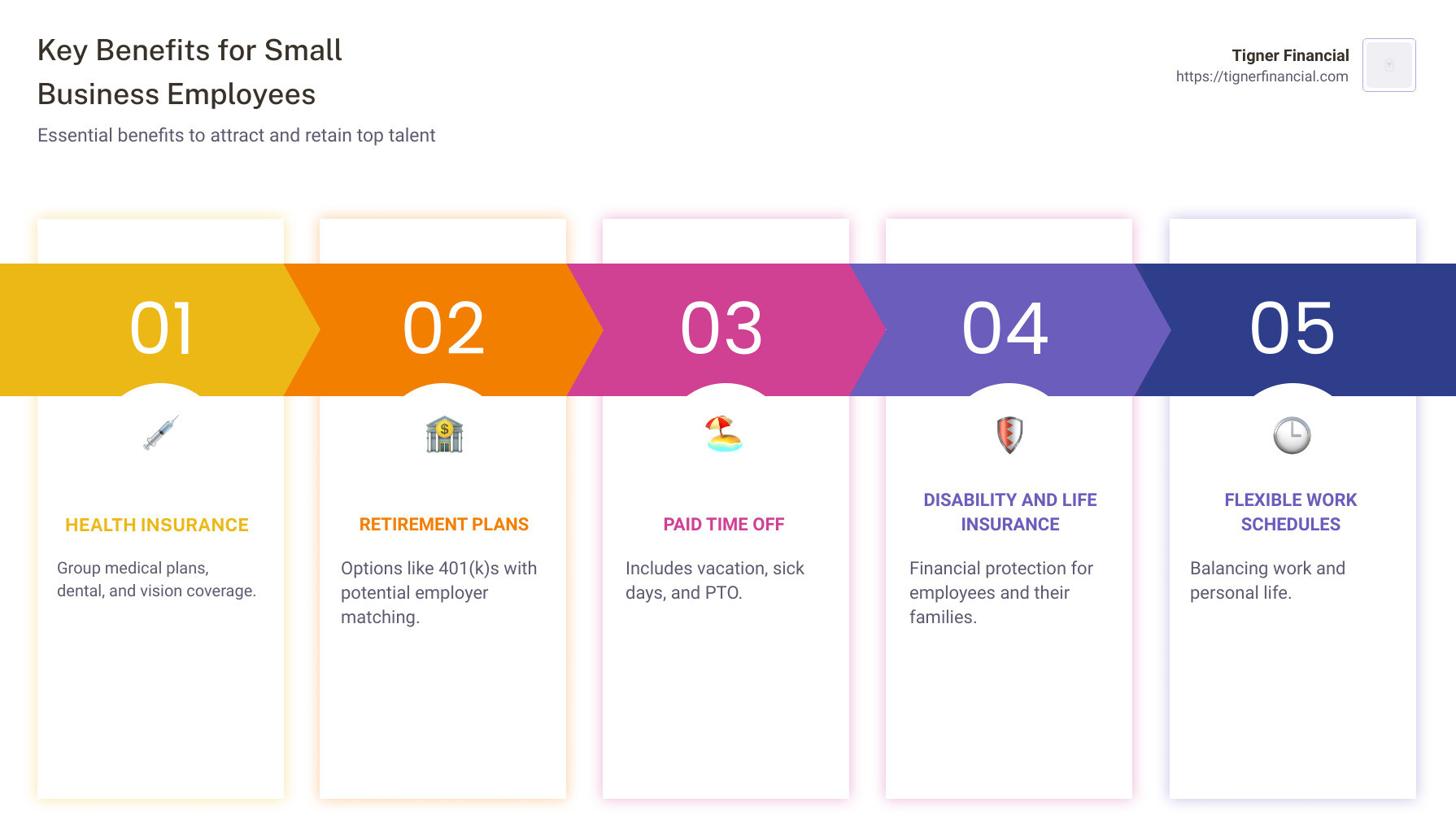
Key Benefits for Small Business Employees:
1. Health Insurance: Group medical plans, dental, and vision coverage.
2. Retirement Plans: Options like 401(k)s with potential employer matching.
3. Paid Time Off: Includes vacation, sick days, and PTO.
4. Disability and Life Insurance: Financial protection for employees and their families.
5. Flexible Work Schedules: Balancing work and personal life.
Offering these benefits not only boosts employee satisfaction and loyalty but also improves productivity by fostering a healthy work-life balance. Comprehensive benefits packages show employees that their well-being is a priority, enticing top candidates to join your small business over larger competitors.
Hello, I’m Dalton Tigner. As a specialist with over 30 years of experience in the insurance industry, I’ve helped numerous small businesses craft and manage their employee benefits packages successfully. My mission is to ensure that benefits for small business employees are both affordable and effective, contributing to a thriving, motivated workforce.
Understanding Employee Benefits
Employee benefits are compensations beyond basic wages. They include health insurance, retirement plans, paid time off, and other perks. Think of them as extras that make employees feel valued and secure. These benefits can be a game-changer for small businesses, helping to attract and retain top talent.
Types of Employee Benefits
Core Benefits:
– Health Insurance: Covers medical expenses, essential for employee well-being.
– Retirement Plans: Helps employees save for their future.
– Paid Time Off (PTO): Includes vacation, sick days, and holidays.
– Disability Insurance: Provides income if an employee can’t work due to illness or injury.
Fringe Benefits:
– Gym Memberships: Encourages a healthy lifestyle.
– Childcare Assistance: Helps working parents manage their responsibilities.
– Employee Discounts: Offers savings on products or services.
– Company Cars: Provides transportation for work-related activities.
Financial Benefits:
– Annual Pay Raises: Keeps compensation competitive.
– Financial Education: Helps employees manage their money better.
– Student Loan Assistance: Eases the burden of education debt.
– Equity Compensation: Allows employees to own a part of the company.
Mental Health Benefits:
– Employee Assistance Programs: Provides support for personal issues.
– Flexible Work Schedules: Offers a better work-life balance.
– Wellness Programs: Promotes overall health and well-being.
Intangible Business Asset
Employee benefits are more than just perks; they are an intangible business asset. They shape your company’s culture and reputation. A well-thought-out benefits package can make your small business a desirable place to work, setting you apart from competitors.
In summary, understanding and offering a variety of employee benefits is crucial. These benefits not only attract top talent but also keep your current employees happy and productive.
Next, we’ll dive into the mandatory benefits that small businesses must provide to stay compliant with regulations.
Mandatory Benefits for Small Businesses
Navigating employee benefits can be a bit tricky, especially for small businesses. To stay compliant with laws and regulations, there are several mandatory benefits you must provide. Let’s break them down:
Social Security and Medicare
Social Security and Medicare are federal programs that you and your employees contribute to through payroll taxes.
- Social Security: Both you and your employee contribute 6.2% of wages. This helps provide retirement income, disability benefits, and survivor benefits.
- Medicare: Both you and your employee contribute 1.45% of wages. This covers health insurance for employees when they turn 65 or face certain medical conditions.
Workers’ Compensation
Workers’ compensation is a safety net for both you and your employees. If an employee gets hurt or sick because of their job, workers’ comp covers medical treatment, lost wages, and rehabilitation.
- Requirement: Most states require workers’ comp as soon as you hire your first employee (except Texas).
- Cost: Rates vary depending on the type of work. For example, an office job will cost less than a construction job due to different risk levels.
Unemployment Insurance
Unemployment insurance provides financial support to workers who lose their jobs through no fault of their own.
- Contribution: You pay into this system through payroll taxes.
- Benefit: It helps former employees stay afloat while they search for new work.
COBRA
If you have 20 or more employees and offer group health insurance, you must comply with the Consolidated Omnibus Budget Reconciliation Act (COBRA).
- Coverage: COBRA allows former employees and their families to continue their health insurance coverage for 18 to 36 months.
- Cost: The former employee must pay the entire premium, including the part you used to cover.
Family and Medical Leave Act (FMLA)
For businesses with 50 or more employees, the Family and Medical Leave Act (FMLA) mandates up to 12 weeks of unpaid, job-protected leave for certain family and medical reasons.
- Qualifying Events: Birth of a child, adoption, caring for an immediate family member with a serious health condition, or a serious health condition of their own.
- Eligibility: Employees must have worked for at least 12 months and at least 1,250 hours in the previous 12 months.
Disability Insurance
In some states, disability insurance is mandatory. It’s a lifeline for employees who can’t work because of a long-term illness or injury.
- States: California, Hawaii, New Jersey, New York, Puerto Rico, and Rhode Island.
- Coverage: It covers a portion of employees’ lost income due to non-work-related injuries or illnesses.
Understanding these mandatory benefits ensures you meet legal requirements and provide essential protections for your employees.
Comprehensive Benefits Packages
When it comes to attracting and retaining top talent, offering a comprehensive benefits package is key. These packages go beyond the basics to provide employees with a range of perks that can greatly improve their work-life balance and overall well-being.
Health Benefits
Health Insurance
Group health insurance is the cornerstone of any benefits package. It ensures that employees and their dependents have access to necessary medical care. Small businesses can purchase affordable group health plans through the Small Business Health Options Program (SHOP).
Medical Flexible Spending Account (FSA)
An FSA allows employees to set aside pre-tax dollars for eligible medical expenses like copayments and prescription drugs. This reduces their taxable income and helps cover out-of-pocket healthcare costs.
Health Reimbursement Arrangement (HRA)
HRAs are employer-funded accounts that reimburse employees for qualified medical expenses. These are tax-free and can be custom to fit your business’s budget.
Health Savings Account (HSA)
HSAs are available to employees enrolled in high-deductible health plans (HDHPs). Employees can save pre-tax money for medical expenses, and unused funds roll over year to year. Plus, they can take their HSA with them if they leave the company.
Financial Health Benefits
Retirement Accounts
Offering retirement plans like 401(k)s can give employees peace of mind about their future. Consider making matching contributions to help them reach their savings goals faster.
Annual Pay Raises
Regular pay raises help employees keep up with the cost of living and feel rewarded for their hard work. This can reduce their financial anxiety and improve job satisfaction.
Financial Education
Providing financial literacy programs can empower employees to manage their money better. Workshops on budgeting, saving, and investing can give them lifelong skills for financial fitness.
Tuition and Student Loan Assistance
Helping employees with student loan repayments or offering tuition reimbursement can make your business more attractive, especially to younger workers burdened by debt.
Equity Compensation
Offering stock options or discounted stock purchases gives employees a personal stake in the company’s success. This can boost their motivation and loyalty.
Mental Health Benefits
Employee Assistance Programs (EAPs)
EAPs offer support for personal issues like mental health, work-life balance, and substance abuse. These programs can be part of your health insurance plan or through a stand-alone vendor.
Employee Resource Groups
These groups provide a sense of community and support within the workplace. They can help employees feel more connected and engaged.
Social Perks
Social perks like team-building activities, office parties, and outings can improve workplace morale and foster a positive company culture.
Flexible Work Schedules
Allowing employees to set their own hours or work remotely can greatly improve their work-life balance. This flexibility is highly valued and can increase job satisfaction.
Wellness Programs
Wellness programs might include discounted gym memberships, on-site exercise classes, and access to therapists. These programs can be customized to meet your budget and employee needs.
Fringe Benefits
Dental and Vision Coverage
Routine dental exams and comprehensive eye exams can catch health issues early. Offering dental and vision plans can improve overall employee health and productivity.
Life Insurance
Group life insurance provides peace of mind for employees worried about their dependents’ financial well-being. It’s a valuable benefit that can come at a relatively low cost.
Dependent Care FSA
A dependent care FSA allows employees to set aside pre-tax dollars for childcare or elder care expenses. This can be a huge relief for working parents and caregivers.
Gift Cards
Offering gift cards as rewards for good performance or milestones can be a simple yet effective way to show appreciation.
Paid Volunteer Days
Giving employees paid time off to volunteer can boost their morale and sense of purpose. It also reflects well on your company’s commitment to social responsibility.
Memberships and Passes
Offering discounted or free memberships to gyms, museums, or other local attractions can be a nice perk that improves employees’ personal lives.
Unique Benefits to Set Your Company Apart
In a competitive job market, offering unique benefits can make your small business stand out. Here are some creative options to consider:
Backup Care
Backup care is a lifesaver for employees with young children or elderly family members. When regular caregiving arrangements fall through, employees can access 24/7 live representatives to secure suitable care quickly. This benefit can reduce absenteeism and boost productivity. Plus, employees will appreciate the peace of mind.
Pet Insurance
For pet lovers, pet insurance can be a game-changer. It helps manage the costs of veterinary care, from vaccinations to surgeries. By offering pet insurance, you show employees you care about their whole family, including their furry friends.
Yoga Classes
Yoga classes can promote physical health and reduce stress. Whether held at the office or through local studios, this perk can lead to a more relaxed and productive workforce. Imagine a team that starts the day with a calming yoga session!
Free Books
Offering free books is a simple but effective way to encourage continuous learning and development. Whether through a book club or a monthly book allowance, this benefit can foster a culture of growth and curiosity.
Pet-Friendly Environments
Allowing pets at work can create a more relaxed and enjoyable atmosphere. Pet-friendly environments can reduce stress and improve morale, making the office a more pleasant place to be. Just imagine the joy of having a furry friend around during a tough workday!
Onsite Health Care
Providing onsite health care services, such as flu shots or regular health screenings, can make it easier for employees to stay healthy. This convenience can lead to fewer sick days and a more productive team.
Wedding Reimbursement
A unique and heartfelt benefit is wedding reimbursement. Helping employees with wedding expenses shows you care about their personal milestones. This benefit can foster loyalty and a deeper connection to the company.
These unique benefits can set your small business apart by showing employees you value their well-being and personal growth. Next, we’ll explore cost management strategies for small business benefits.
Cost Management Strategies for Small Business Benefits
Managing the costs of benefits for small business employees can seem daunting. However, with the right strategies, you can offer a competitive package without breaking the bank. Here are some effective cost management strategies:
Non-Traditional Benefits
Not all benefits have to be expensive. Non-traditional benefits like flexible work schedules, remote work options, and wellness programs can be highly valued by employees and cost very little. These benefits can improve work-life balance and boost morale without a significant financial investment.
Low-Cost Benefits
Consider offering low-cost benefits like paid volunteer days, gift cards for exceptional performance, or free meals. These perks can improve employee satisfaction and loyalty. For instance, a gift card to a local coffee shop can be a small but meaningful reward for hard work.
Multiple Lines of Insurance
Purchasing multiple lines of insurance from a single provider can save money. By bundling health, dental, and vision insurance, you might get a discount. This approach not only reduces costs but also simplifies the administration of these benefits.
Voluntary Benefits
Voluntary benefits such as wellness programs and employee assistance programs (EAPs) empower employees to take charge of their health. These programs can be offered at little to no cost to the employer, as employees typically pay for them. This way, employees get valuable benefits without adding to the company’s expenses.
Employee-Funded Benefits
Offering employee-funded benefits, like high-deductible health plans paired with Health Savings Accounts (HSAs), can be a win-win. Employees contribute to the cost of their benefits, which makes them more affordable for the business. Plus, employees often get better rates than they would on their own.
Education on Benefits
Continually educating employees about the benefits you offer ensures they use them to the fullest. This can maximize the value of the benefits provided. For example, if employees understand how to use their health savings accounts effectively, they can save money on healthcare costs, benefiting both them and the company.
Professional Insurance Brokers
Working with a professional insurance broker can help you identify the best benefits for your budget. Brokers have the expertise to find cost-effective solutions that meet your employees’ needs. They can also help you steer the complexities of benefits administration, reducing the risk of errors.
By implementing these cost management strategies, you can offer a robust benefits package for small business employees without compromising financial stability. Next, we’ll explore how to offer these benefits strategically as a small business.
How to Offer Benefits as a Small Business
Offering benefits as a small business doesn’t have to be overwhelming. By making strategic choices and leveraging third-party resources, you can create a competitive benefits package that attracts and retains top talent.
Strategic Choices
Start by understanding what your employees value most. Conducting employee surveys can provide insights into their preferences. Simple tools like Google Forms can help you gather this data quickly. Tailoring your benefits to meet these needs ensures higher satisfaction and utilization.

Third-Party HR Services
Consider partnering with a third-party HR service provider. Companies like Paychex can help you manage benefits more efficiently. They reduce administrative overhead and keep you compliant with ever-changing regulations. This allows you to focus on running your business while they handle the complexities of benefits administration.
Benefits Brokers
Engaging a professional benefits broker can be a game-changer. Brokers have the expertise to find the best benefits options within your budget. They can negotiate better rates and bundle services to provide comprehensive coverage at a lower cost. By leveraging their industry knowledge, you can offer attractive benefits without breaking the bank.
Tax Professionals
Consulting with tax professionals can also be beneficial. They can help you steer tax credits and deductions related to employee benefits. For example, the Small Business Health Care Tax Credit can make offering health insurance more affordable. Understanding these financial incentives can significantly offset the cost of providing benefits.
Employee Surveys
Lastly, don’t underestimate the power of employee feedback. Regularly surveying your team helps you stay aligned with their evolving needs. This ongoing dialogue ensures that your benefits package remains relevant and valued. Plus, involving employees in the decision-making process can boost morale and engagement.
By leveraging these strategies, you can offer a benefits package that meets your employees’ needs while staying within your budget. Next, we’ll address some frequently asked questions about offering benefits for small business employees.
Frequently Asked Questions about Benefits for Small Business Employees
How do I show employees the value of the benefits I’m offering?
Create a Total Compensation Summary: Show your employees the full picture by creating a total compensation summary. This statement breaks down the value of their salary plus the employer’s contributions to benefits. Seeing these figures can help employees understand the real value of their benefits.
Communicate Clearly: If you’re updating or changing your benefits package, make sure to communicate these changes clearly. Develop a communication plan to deliver this information, including any required legal notices. This helps employees understand the impact of new or updated benefits and where to go for more information.
What benefits are most important to employees?
Health Insurance: Health insurance is often the backbone of any benefits package. Employees value it highly because individual health plans can be very expensive.
Paid Time Off (PTO): Paid leave, including vacation, sick days, and holidays, is crucial. It helps employees balance their work and personal lives.
Retirement Plans: Offering a 401(k) or other retirement plans shows you’re invested in your employees’ long-term financial health.
Flexible Work Arrangements: Flexibility in work schedules and the option to work remotely are increasingly important, especially post-pandemic.
Wellness Programs: Programs that support mental and physical health, like gym memberships or access to mental health resources, are also highly valued.
How much does offering a benefits package typically cost?
Average Costs: According to a 2024 Bureau of Labor Statistics news release, benefits costs in December 2023 averaged $12.44 per hour worked in service industries and $14.44 per hour in goods-producing industries. Here are some specific costs:
- Health insurance: $2.94 per hour
- Paid leave: $3.26 per hour
- Retirement plans: $1.07 per hour
- Social Security and Medicare: $2.57 per hour
Affordable Options: Many benefits can be affordable. For example, flexible spending accounts or vision benefits can be solely funded by employees, with the employer covering only administrative costs.
Tax Credits: Small businesses may also be eligible for tax credits, such as the Small Business Health Care Tax Credit, which can help offset the costs of providing health insurance.
By understanding these aspects, you can better manage your benefits package and ensure it meets both your budget and your employees’ needs.
Next, we’ll explore unique benefits that can help set your company apart from the competition.
Conclusion
Employee benefits are more than just perks—they are a strategic tool that can make a huge difference for your small business. They help attract and retain top talent, boost employee morale, and improve productivity. In today’s competitive job market, offering a well-rounded benefits package is not just a nice-to-have; it’s a must.
Why are benefits so important?
Attracting Talent: A strong benefits package can help you stand out to potential hires. Many job seekers prioritize benefits like health insurance, retirement plans, and flexible work schedules when considering job offers.
Retaining Employees: Offering good benefits can reduce turnover. Employees are more likely to stay with a company that takes care of their well-being and financial security.
Boosting Morale and Productivity: When employees feel valued and supported, they are more engaged and productive. Benefits like wellness programs and mental health support can improve overall job satisfaction.
Strategic Advantage
For small businesses, benefits can offer a strategic advantage. Unlike larger companies, small businesses have the flexibility to offer unique and personalized benefits that can make a big impact. Think about offering flexible work arrangements, wellness programs, or even pet-friendly environments. These kinds of benefits can make your company a more attractive place to work.
Why Choose Tigner Financial?
At Tigner Financial, we understand the challenges small businesses face in creating competitive benefits packages. We offer personalized solutions custom to your specific needs and budget. With our expert guidance and ongoing support, we help you steer the complexities of employee benefits, ensuring your package is both comprehensive and cost-effective.
Ready to Improve Your Employee Benefits Strategy?
Let Tigner Financial be your partner in creating a benefits package that sets your small business apart. Find how we can help.
Investing in employee benefits is an investment in the future of your business. By showing your employees that you value their well-being, you create a loyal, motivated, and productive workforce. And that’s a win-win for everyone.


